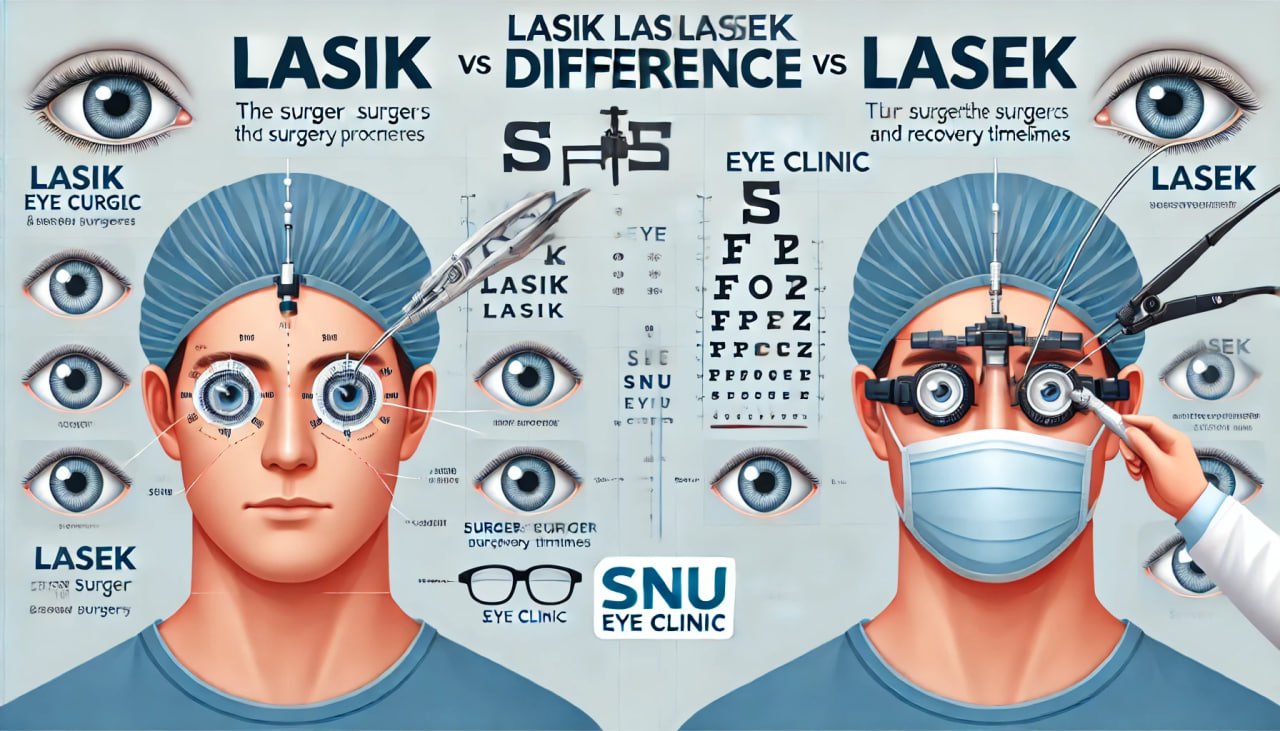
When considering laser eye surgery, two popular procedures often come up: SMILE LASIK and LASEK. Both are effective methods for treating refractive vision problems like nearsightedness, farsightedness, and astigmatism. However, each procedure has its own set of benefits, recovery times, and suitability depending on the patient’s needs and conditions. At SNU Eye Clinic in Seoul, both of these procedures are available, offering patients advanced treatment options tailored to their specific eye care requirements. In this article, we will break down the differences between SMILE LASIK and LASEK, helping you make an informed decision about which procedure might be right for you.Visit for more details 라식 연말정산
What is SMILE LASIK?
SMILE LASIK, which stands for Small Incision Lenticule Extraction, is a cutting-edge vision correction surgery that provides a less invasive alternative to traditional LASIK. The procedure involves using a femtosecond laser to create a small, precise incision in the cornea. A tiny lenticule, or disc of tissue, is then removed, reshaping the cornea and correcting the refractive error that is causing blurry vision. Unlike conventional LASIK, which requires creating a large corneal flap, SMILE LASIK only involves a small incision, making the recovery process smoother for many patients.
At SNU Eye Clinic, SMILE LASIK is performed by highly skilled ophthalmologists who use the latest technology to ensure a precise and safe procedure. One of the key advantages of SMILE LASIK over traditional LASIK is its minimally invasive nature. The smaller incision helps preserve more of the corneal tissue, which can lead to fewer complications and a faster recovery time.
What is LASEK?
LASEK, which stands for Laser-Assisted Sub-Epithelial Keratectomy, is another laser eye surgery that is often compared to LASIK. In LASEK, the surgeon uses an alcohol solution to loosen the corneal epithelium, the thin outer layer of the cornea, before reshaping the cornea with a laser. Unlike LASIK, LASEK does not require the creation of a flap. Instead, the epithelial layer is repositioned after the laser treatment.
LASEK is generally recommended for patients with thinner corneas or other eye conditions that may make them unsuitable for LASIK. While the recovery period may be a bit longer compared to LASIK or SMILE LASIK, the results are still highly effective in treating refractive errors.
Key Differences Between SMILE LASIK and LASEK
- Surgical Technique:
The most significant difference between SMILE LASIK and LASEK lies in the surgical technique. SMILE LASIK uses a femtosecond laser to create a small incision and remove a lenticule of tissue, whereas LASEK uses an alcohol solution to loosen the corneal epithelium and then reshapes the cornea with an excimer laser. - Recovery Time:
In general, the recovery time for SMILE LASIK tends to be shorter compared to LASEK. SMILE LASIK involves less disruption to the cornea, which allows for quicker healing. Many patients experience improved vision within a day or two. On the other hand, LASEK recovery can take a few days longer, as the epithelium needs to heal and reattach. - Suitability for Different Patients:
SMILE LASIK is typically recommended for patients with moderate to high degrees of nearsightedness or astigmatism. It is also suitable for people with thicker corneas, as the procedure preserves more of the corneal tissue. LASEK, however, may be a better option for individuals with thinner corneas or other conditions that prevent them from being good candidates for LASIK or SMILE LASIK. - Risk of Dry Eyes:
Both SMILE LASIK and LASEK carry a risk of temporary dry eyes, though it is generally less pronounced in SMILE LASIK. Since SMILE LASIK involves a smaller incision, there is less disruption to the corneal nerves responsible for tear production, which can lead to a lower chance of developing long-term dry eyes compared to traditional LASIK and even LASEK. - Cost:
SMILE LASIK is generally more expensive than LASEK due to the advanced technology and precision involved in the procedure. However, the benefits of quicker recovery, reduced risk of complications, and improved long-term results make it a worthwhile investment for many patients. LASEK, being less technologically advanced, tends to be more affordable.
Vision Recovery Period
Both SMILE LASIK and LASEK require some time for the eyes to heal and for vision to stabilize fully. With SMILE LASIK, most patients experience improved vision almost immediately after the procedure. Full recovery, however, can take a few weeks to a few months, depending on individual healing processes. During this time, patients are advised to follow post-surgical care instructions, including the use of artificial tears to prevent dryness and protect the eyes from infections.
In the case of LASEK, recovery may take slightly longer. Patients typically experience more discomfort during the first few days post-surgery, including blurred vision, light sensitivity, and a feeling of having something in the eyes. However, these symptoms generally subside within a week. Like SMILE LASIK, the final vision stabilization can take a few months.
Choosing Between SMILE LASIK and LASEK at SNU Eye Clinic
When deciding between SMILE LASIK and LASEK, it is important to consider various factors, such as the thickness of your corneas, the severity of your refractive error, and your personal preferences regarding recovery time. If you have a moderate to high degree of nearsightedness and a healthy cornea, SMILE LASIK may be the optimal choice for you. However, if you have thinner corneas or other factors that make you a better candidate for LASEK, this procedure may be the better option.
The experienced ophthalmologists at SNU Eye Clinic are well-equipped to guide you through the decision-making process. By assessing your unique eye health and discussing your lifestyle and visual goals, they can recommend the most appropriate procedure for your needs.
If you’re considering LASIK surgery, whether SMILE LASIK or LASEK, it’s important to select a clinic with a reputation for quality care and successful outcomes. SNU Eye Clinic in Gangnam, Seoul, is renowned for offering advanced vision correction procedures using the latest technology and techniques. Their dedicated team of eye specialists ensures that each patient receives personalized care to achieve the best possible results.
For more information, or to schedule a consultation, visit snuseoul.com today.